Showing posts with label heartandsoul. Show all posts

Friday, December 3, 2021

The Best Self-Care Method (that you've never even thought of)

It's a good thing that self-care is talked about and emphasized more these days.  It's a really good thing!  We have more on our plates than ever before, and I would venture to say that the information age (access to all known information in existence through a device in your pocket) puts more on our minds than ever before, too.

When I was a young mom, self-care was the last thing on my mind, and the last thing I thought I could fit into my life.  Now that I’m a mom of more self-sufficient kids, I understand the importance of self-care, but I also realize that back then I was actually doing one of the best methods of self-care there is without even realizing it!

I definitely want to share this awesome self-care method with you, but first let’s look at self-care a little more. 

What Self-Care Is and Is Not

Moira Lawler from Everyday Health states it well:  “Let’s clear up one common misconception from the get-go: Self-care is not synonymous with self-indulgence or being selfish. Self-care means taking care of yourself so that you can be healthy, you can be well, you can do your job, you can help and care for others, and you can do all the things you need to and want to accomplish in a day.”

I feel that phrase bears repeating for some of us:  Self-care is not synonymous with self-indulgence or being selfish. 

Self-care includes things like getting enough sleep and eating good food that fuels your body, but it’s a lot more than that, too.  For an introvert like me, self-care is spending time alone with myself or spending time with cherished friends or family.  For an extrovert, self-care might look like a night out on the town with friends or attending/throwing a party.

So think more about what self-care looks like for you than what it looks like for someone else.

The Benefits

Lawler’s article refers to several studies which show that consistent self-care leads to many broad benefits, such as better health—both physical and mental—including reduced stress, development of coping skills, ability to combat burnout, improved immune system, increased productivity, and higher self-esteem.

Jane Stark at Botanica Health lists five wonderful benefits of self-care: slowing down makes you more productive; self-care boosts your immune system, improves your self-compassion, helps you find out who you really are, and empowers you to give more to others (not less).  

How to Make the Time for Self-Care

While “manicure” and “read a book” often come up as self-care suggestions, it can be difficult for young moms and other busy women to find the time for things like this.  The good news is that self-care is whatever you want it to be.  It can take as little or as much time as you want it to.  I have a friend whose self-care practice includes buying herself fresh flowers once a week to keep on her bedside table. 

So, before I share my best self-care suggestion, I want to share with you a few ideas for making time—and even thinking about time differently.  These are some of my favorite suggestions!

The Best Self-Care You’ve Never Thought Of

Now that we’ve got all the business out of the way, let’s look at the best self-care method you’ve never even thought of.  I love it because it involves something you already have (and it’s something you already love, too).  I’ve called this best self-care method “the best kind of retail therapy,” and it’s definitely true.  (In fact, you can jump over to that article to see for yourself.)

You may be completely surprised that the best method of self-care you’ve probably never even thought of is:  your own pictures.

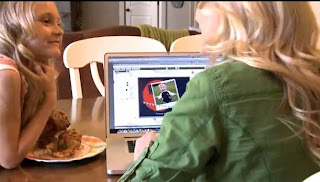
I don’t mean the pictures that are in a big jumble on your phone that you can’t find or keep track of, I mean pictures that you take time to give meaning to, like this:

Pictures are much more powerful than we give them credit for!  Remember that list of benefits of self-care?  It turns out, taking time to sit down and preserve your pictures does many of the same things:

  • creates connections
  • raises self-esteem
  • increases a sense of belonging
  • has a grounding, centering effect
  • reduces stress
  • improves memory
  • creates perspective and power
  • contributes to healing from grief
  • increases happiness
  • increases relaxation
  • and, my personal favorite:  shown in studies to make you feel happier than chocolate! 


(There are many references and sources from which I compiled that list of benefits—most of them can be found at this link.)

What I love most about preserving my photos and memories as self-care is that it is not only so good for me, but good for my family, too, since they get to enjoy the by-product of my self-care for years and years to come.

NOTE:  I am a Forever affiliate (a decision I made because I love it so much), so you will find several affiliate links in this post, from which I earn a commission if you make a purchase, at no extra cost to you.


My Go-To Self Care

When my kiddos were little, my “me-time” was getting together with a friend to work on scrapbooks while our kids played.  It entailed hauling little carts of pictures and scrapbooking material, but we’d do it for several hours a few days in a row, so we banged out page after page, got some “Mommy Time,” and had play dates at the same time.  It was perfect.

I didn’t realize until years later that it was self-care. 

In fact, it inspired me to write my first ebook, The Secret Ingredient to Self-Care and Wellness (which you can read free at that link).  It’s about a 40-minute read—and perfect for “me time.” 

Nowadays, those kiddos have grown and my friend and I live in different states. I do my photo-storybooking (a.k.a. scrapbooking) mostly on my own using just my laptop and a digital scrapbooking and professional publishing company I’m completely in love with.  And sometimes I Zoom with my friend while I’m working!

Now What?

1.     Consider what will benefit you the most in terms of self-care.

2.     Consider what you can do to make time for it.  (Although we certainly benefit from slowing down and having non-kid time, remember that I used “me time” and “play dates” and “work on scrapbooks” in combination!  There are many options for making time.)

3.     Prioritize.  Be your own best friend on this and don’t let yourself down.

Involve your pictures.  It’s the best method of self-care you’ll ever think of.

Thanks for reading!  Share this post on social media and tag someone amazing who could use a little higher-quality self-care!  

Hooray!  This post was a featured favorite at:


Follow Photo & Story Treasures on social media here:
  

Friday, May 7, 2021

How Photos, Memories, and Stories Improve Emotional Well-Being

If you've been around this blog a time or two, you've certainly learned that photos, memories, and stories aren't just cute little extras that some people like to play with.  They are actually crucial parts of self-care and well-being, play an important part in stress relief and happiness, and have actually been shown in studies to be the best thing you can do for your kids.


If you'd like to know exactly how photos, memories, and stories improve emotional well-being, provide perspective for your life's events, and even help in healing from grief, you can spend several hours here at the blog reading.  And you're welcome to!  

Or, you can peek in at this presentation I was asked to give at a Photos & Memories Boot Camp a few weeks ago.  


Based on the comments I received afterwards, I think you're going to love what you learn here in only 27 minutes.  So sit back with a yummy drink and learn how photos, memories, and stories improve emotional well-being.  Then leave a comment about what you learned here that has encouraged you.

When you're ready to make this a reality in your life, click here to get started.  I'm here to help!

Follow Photo & Story Treasures on social media here:


Thursday, March 19, 2020

How to Connect to Your Own Heart - an online retreat!

Today's world is so fast-paced that many people feel pulled in multiple directions--most of the time.

Does that describe you?  

Despite the idea that social media connects us, the common ills of our day are loneliness, stress, depression, and lowered self-esteem.

Unfortunately, what we lose most often these days is ourselves.

This has been on my heart and mind for a while, so I have been working on a solution--a small thing we can do to rediscover and connect with ourselves.  And today I'm so happy to introduce a new online retreat I'll be offering called "Connect to Your Heart through Your Photos and Your Stories."


In "Connect to Your Heart," you will learn the power of your photos and your stories (as shown in studies, actually!) and how to use these simple tools to increase your own peace, contentment, gratitude, happiness, and even relaxation.  Connecting with yourself has a grounding effect that can help you in your goals and everyday life.

Each of the four sessions will be part learning (information) and part practice (telling your story and connecting with your heart using your photos) as you create a beautiful heirloom-quality hardbound book about yourself.

It's a retreat like no other!

In fact, you can choose your own place of retreat during each of the four sessions.  What would be a retreat for you--a place you could go for an hour to be with yourself?  Retreat to your bedroom with your laptop.  Retreat to your favorite wifi-friendly cafe.  Retreat to a restaurant with friends.  Or retreat to your local library (I love the quiet there!), or even your kitchen table.

Here's what Connect to Your Own Heart is--in 1 minute:

Here's what you need to know about this wonderful online retreat:
  • "Connect to Your Heart" will be held via Zoom for four 1  1/2-hour sessions.
  • Cost for the 4-week retreat is just $45! 
  • Cost for the 8x8 hardbound book you'll be creating is $30+shipping and not included in the price of the retreat.  Payment for the book and shipping will be made at the end of the retreat.
  • Minimum number of people required to hold the retreat is 5; maximum number is 10.
Choose from the daytime Connect to Your Heart Retreat or the evening one:
  • 10:00-11:30am* on Fridays May 8-29
  • 7:00-8:30pm* on Tuesdays May 5-26
The Zoom sessions will be recorded and emailed to you if you need to miss a session.  (*And times shown are Mountain Time.)
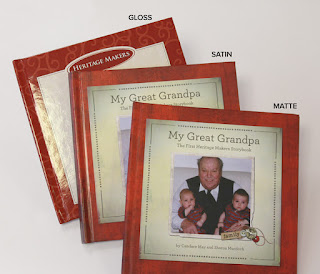
You'll make a 21-page hardbound 8x8 book just like this.

To secure your spot in the Connect to Your Heart Retreat, the $45 payment must be received by May 1.  Email jenniferwise4heritagemakers@gmail.com to request payment information and to specify whether you will be attending the daytime retreat or the evening retreat.  I'll reply to give you instructions on payment options, and then I'll use your email to send you the Zoom link to join the four Connect to Your Heart Retreat sessions.

And as a bonus:  Everyone who completes payment by April 20 will receive a swag bag in the mail!  That's right--I'll send you a little Connect to Your Heart gift bag.  So why not register a little early?!

Remember that each retreat (daytime/evening) is limited to only ten people, so don't delay.  

You need this.  You know you do.  I know you need it, too--because every one of us needs to find the power and peace that comes from connecting with ourselves.

Come see what a difference connecting with your own heart can make!

Bring a friend to the retreat!  Share this post on Facebook, Twitter, Pinterest, or your
favorite social media platform.

Thursday, December 12, 2019

How to Appreciate Life through Memory-Keeping

This post was updated 2023.

When people ask, "So, what do you do?" I generally have a hard time answering.  I try to focus so much on individual needs that in reality I end up doing a variety of things that fall well outside the basic "Photo & Story Treasures consultant" description.

I was asked this "So, what do you do?" question recently, and since my answer wasn't planned, I've thought about it a lot since it came out of my mouth.  Here's what I said:

I teach (free) classes on the importance of our photos and memories and then provide strategies and solutions to make high-quality memory-keeping doable.  It's less about "scrapbooking" and more about appreciating and cherishing life.


In the 14 1/2 years I've been sharing the *Heritage Makers vision ("Everyone has a story.  Tell yours."), I've been met with surprising responses when I mention that one of the methods of telling your story is digital scrapbooking.  

There are lots of methods, by the way, from the Yearbook method to creative, flexible digital scrapbooking,  etc. 

But the word "scrapbooking" seems to get the most reaction.  People tend to either love it or hate it.  And people tend to mistakenly believe the myth that if they don't scrapbook then they can't preserve their memories.

So let me say this again.

Preserving photos and memories is less about scrapbooking and more about appreciating and cherishing life.

See "how to get started" for more options!

Why We Need Memory-Keeping So Desperately

Doesn't it seem like depression, anxiety, fear of missing out, and a lack of real connection are prevalent these days?  

So doesn't it follow that happiness, security, joy, gratitude, and connection are needed right now more than ever?  

The good news is that these things are closer than we realize!

Let me be so bold as to suggest that the best way to appreciate your life is through memory-keeping.  Call it "scrapbooking" or don't, but we need what it does for us!

Research going back over 25 years has concluded the following amazing (and very hopeful!) facts:

So don't you think it's time?  Don't you think it's time to stop worrying about "scrapbooking" or "not scrapbooking" and just be a memory-keeper?  

Photos and memories do so many good things for us--so many things we NEED!  They aren't just "nice"--they're necessities.


Memory-keeping is nothing more than sitting down with your photos and memories--your life experience--and putting words to them.  It's organizing the things that happen in such a way that you can develop perspective and gratitude.  It's seeing long-gone moments and long-gone faces in order to remember and appreciate.  

How I Know It Matters

I'll end here with two personal examples.  

In 2012, my brother and sister-in-law were finally expecting a baby after years of trying, waiting, and trying new (very expensive) options.  When my baby nephew died halfway through the pregnancy, the grief was unlike anything any of our family members had ever felt.  I couldn't do anything for them, so I made them a book.  (I discussed my experience here if you'd like to read it.)

Looking through pictures that were taken at the hospital 2,000 miles away from me helped me "be there."  Writing down the little miracles that happened along the way that my family had told me about over the phone helped me tell this little boy's story in a really beautiful way.  We grieved, yes, but putting those things to paper helped us through the grief AND helped us recognize blessings we might otherwise have missed.  


And now that baby boy's 6-year-old sister gets to read about the big brother she never got to meet.  He is real to her, and it has created a connection for her.

Example 2:  Mostly, though, life is great!  There are birthdays and graduations, new jobs and old friends.  I take pictures of all these things.  Because I don't let them sit on my phone or camera and forget about them, I get to re-live them!  I get to re-love them!  


Experiences and sweet times don't fade and disappear.  


That's how they stay in my memory and in my heart.  Good times are always close by.


How You Can Get Started

Remember when I said, "I teach (free) classes on the importance of our photos and memories and then provide strategies and solutions to make high-quality memory-keeping doable.  It's less about 'scrapbooking' and more about appreciating and cherishing life"?

Well, I record them all!  You can find classes on a variety of topics at my YouTube channel right here!  Be sure you share your favorite one with a friend.

Because the best way to appreciate life really is through remembering it--through memory-keeping.

Pick an easy peasy option or pick a creative me-time option, but whatever you do, pick.  Get started here.


Share and save this blog post and video by Pinning this image or
using the social media share buttons at the left.

Follow Photo & Story Treasures on social media here:
 

Hooray!  This blog post was a featured favorite here:


*2023 UPDATE regarding any outdated references:  Heritage Makers eventually became YPhoto under Youngevity (which purchased Heritage Makers in 2013).  The Heritage Makers website officially closed in 2022

Best-in-the-industry quality and permanent cloud photo storage with guaranteed privacy are required for anything recommended here at Photo & Story Treasures, so we highly recommend Forever for:  

  •  creative digital scrapbooking applicable in a variety of photo products using Artisan software
  •  easy photo-memory books using free AutoPrint and Design & Print software programs
  • private, permanent, secure, and photo and video cloud storage (triple-backed-up and bank encrypted), guaranteed for your lifetime + 100 years
  • white glove digitizing services for old memories like VHS tapes, slides, old scrapbooks (scanning), 8mm film, audio tapes, and much more

Learn more here.

Thursday, September 26, 2019

The Best Thing You Can Do For Your Kids (really!)

It might seem a little suspicious that I could tell you THE BEST thing you can do for your kids, but--believe it or not--it's true!  

Over the last few years, I've done a lot of reading about actual research that has been conducted about the family and what helps kids the most.  The findings are absolutely fascinating!

In fact, if you're a mom who worries about too much screen time and not enough vegetables, this post will help you take heart.

I know—it seems a bold statement.  I can almost see the suspicious look on your face.  I’m sure you’re thinking, “Can you really tell me in one blog post the best thing I can do for my kids?”  Actually, I can.  It’s something simple with powerful, lasting effects, and the great news is that it’s something you already have.  This Best Thing has been proven in studies, too. 

So let me tell you how I first learned about this Best Thing, starting with a little background.

I’ve been a journaler, photo-taker, and photo-preserver for as long as I can remember.  I made it my business in 2005, and in 2009 I started blogging about it.  In 2017 I was invited to be a regular contributor for a new blog where I’d write about family, photos, memories, and connections.  Because of my own personal background and passion, I knew already that photos and memories (“scrapbooking,” if you will) was really good for you.  I knew it was good for kids and families, that it increased connections between people, and that it was a therapeutic and cathartic activity that was a known stress-reliever.  There was a period of about a year and a half where I was writing two blog posts every week, so I started doing reading and research beyond my own personal experience. 

HERE’S THE BEST THING

The first article that really struck me with a sense that I had been onto something all these years was called “The Stories that Bind Us,” by Bruce Feiler, published in The New York Times.  Feiler met with experts, looked at studies, and determined that the best thing you can do for your kids is create a family narrative.  In other words, give them their own stories.

One of the main studies Feiler looked at was one by Dr. Marshall Duke of Emory University.  In the mid-1990s, Dr. Duke was studying the dissipation of the American family and what could be done to counteract it.  Almost by chance, Dr. Duke’s wife Sara mentioned to him her own observation in her work as a psychologist for children with learning disabilities.  

Sara had noticed this about her students:  “The ones who know a lot about their families tend to do better when they face challenges.”


Dr. Duke and his colleague Robyn Fivush decided to test Sara’s hypothesis that knowing family stories makes an enormous difference to kids.   The results were astounding.  They found that kids who know and connect with their family through their family history (or family stories) had higher self-esteem and a stronger sense of control over their lives.  Duke and Fivush determined that family stories were the best source for a child’s emotional health and happiness.  

Shortly after their research, testing, and findings, Duke and Fivush were able to test their theories and results even more thoroughly because September 11, 2001, happened.  Afterwards, they tested the same kids again and found that those who knew more about their families by belonging to their family’s narrative were more resilient in the face of stress and trauma.

So add “resilience” and “coping skills” to that list we’ve started of what family stories do for kids.


Another article that solidified my belief that preserving photos and stories is more powerful than we think was Elaine Reese’s “What Kids Learn From Hearing Family Stories” in The Atlantic.  This article gives even more insight into the power in a family narrative.  She cites 25 years’ worth of studies on the family that show that family stories—any family stories—give kids greater ability to empathize and connect with others, lower rates of depression and anxiety, and a stronger concept of self.

Family stories can be interesting, scary, funny, or even sad.  They can be anecdotal or have distinct morals to the story.  A family history can includes humorous events and silly traditions which strengthen bonds and camaraderie.   Whatever they are, family stories help children know they belong. 

A family narrative lets kids know that Grandma Ethel overcame a hard thing, so they can, too.  Fivush noted that kids with the most self-confidence had a strong sense of their “intergenerational selves.”  Kids learn how to go through and overcome challenges when they know that their family has a history of doing that very thing.  Family stories emphasize that we are capable and there is hope.

GOOD FOR KIDS AND GOOD FOR YOU

Where are your stories?  Is it easy for you to be a storyteller, or not so much?  

I feel too much like a deer in headlights when I think, “Gosh, I should tell a family story at the dinner table.”  When I write things down, I have something to refer to in order to refresh my memory.  Some stories just come up naturally, but others (like stories that didn’t happen to me) aren’t at the tip of my tongue so easily.  When I make a record of my family’s stories, they’re fresher and much easier for me to tell very naturally.  So I collect them!  I record them in books with pictures of the person the story is about.  That way, I can tell them or we can read them together at our family night (or any time).

And here’s what’s cool about that.  All the while these stories are good for my kids, they’re good for me, too. 

Memory-keeping in general is cathartic, therapeutic, and healing.  It’s good for us to sit down with our life’s experiences, sort through them, and give them somewhere to live (book, photo album, digital scrapbooking, etc.)  Journaling is used in therapy for lots of reasons!  (If you haven’t heard of memory-keeping, here’s what it is and why it matters.)

Pictures alone have been shown to increase happiness!  Gretchen Reuben’s “Happiness Project” found that viewing photos help us remember happy times (which makes us happier in the present) and can “bring back” people, places, and things we love.  

I also enjoyed Dr. Peter Naish’s study on how photographs lift your mood and happiness level.  Naish found that the common things we use to try to increase our happiness are eating and drinking.  His study showed that those things actually only increase mood by 1%.  After looking at photos, people reported an 11% increase in happiness!  (By the way, his study also found a 22% increase in relaxation after looking at pictures!  Pictures even beat out chocolate for relaxation, which only came in at 8%.) 


So don’t forget pictures when you’re recording your family stories.  Pictures bring your family’s history to life!  They make the people in the stories real, even if they’ve passed on.  Putting together your own family stories (preferably with pictures) will make you happier while you’re on your way to giving your kids the Best Thing you can do for them.

(If you need ANY help turning your good ideas into reality, just ask me.  I have lots of free resources and ideas and guides, or I hire out to roll up my sleeves and do the work for you if you prefer.)

WHAT YOU CAN DO NOW

Start anywhere!  

Think of a story your mom always told, or a funny thing that happened to your grandpa once.  How did your grandparents (or great-grandparents) come to this country?  Who was the first person in your family to go to college?  What did your ancestors have to overcome?  Whose life seemed like one challenge after another?  What was the defining moment of your grandmother’s faith?  Where did your parents meet?  What’s a lesson you learned as a child that you’ll never forget?  What are your cherished family traditions?

Family stories don’t have to look a certain way.  In fact, that’s the beauty of it.  My family stories are probably not very much like yours, but mine are meaningful to me and yours are meaningful to you.  Just like it should be.  Write down what you know and what you remember, then ask siblings or cousins what stories they remember.  Ask parents or grandparents.  Keep a running list and continue adding to it.        


Because I’ve been helping people professionally publish their photos and memories and stories for several years now, I’ve got a little collection of resources that can help you right here at this post: Why Your Family Needs Its Stories.  It has several suggestions of where to start and how to write down or publish your stories, including several additional links to additional helpful posts.  Find high-quality options for publishing at this link.

If you’re worried about all the things moms are usually worried about, take heart.  I’ve been momming for more than 21 years now, and I’m still concerned about vegetables and technology and if I’ve taught them enough.  As it turns out, just telling them stories of my great-grandma’s hard life and what she made of it and my parents’ faith and my grandpa’s sense of humor has a lot more power than I realize.  

So if your kids won’t eat broccoli or clean up after themselves, tell them a story about something hard you did once and what makes your grandma amazing.  

Tell them a family story of perseverance, tell them your favorite tradition, or tell them how you know you can do hard things.  

It’s actually the Best Thing you can do for your kids.


Did you love the information and encouragement in that post as much as I did?
Share it by Pinning this image, by Tweeting, or by Facebook Sharing.  

Follow Photo & Story Treasures on social media here:
  

Hooray!  This blog post was a featured favorite here: